
Case HistoryBeyond clinical
Atul Gawande: surgery, writing and the long detour
Oxford, political campaigns and health policy came before he finished medical school. The detour became the foundation of everything that followed.
By The Editors
Independent
From the public record. Written from the published sources listed at the end. RICH DOCTOR has not interviewed Dr Atul Gawande; every quotation comes from a cited source.
Their path
- 1965
- Born in Brooklyn, New York, to two Indian doctors
- 1989
- MA in philosophy, politics and economics, Oxford (Rhodes Scholar)
- 1995
- MD, Harvard Medical School
- 1998
- Staff writer, The New Yorker
- 2003
- Completes general surgery residency, Brigham and Women's
- 2012
- Co-founds Ariadne Labs
- 2022
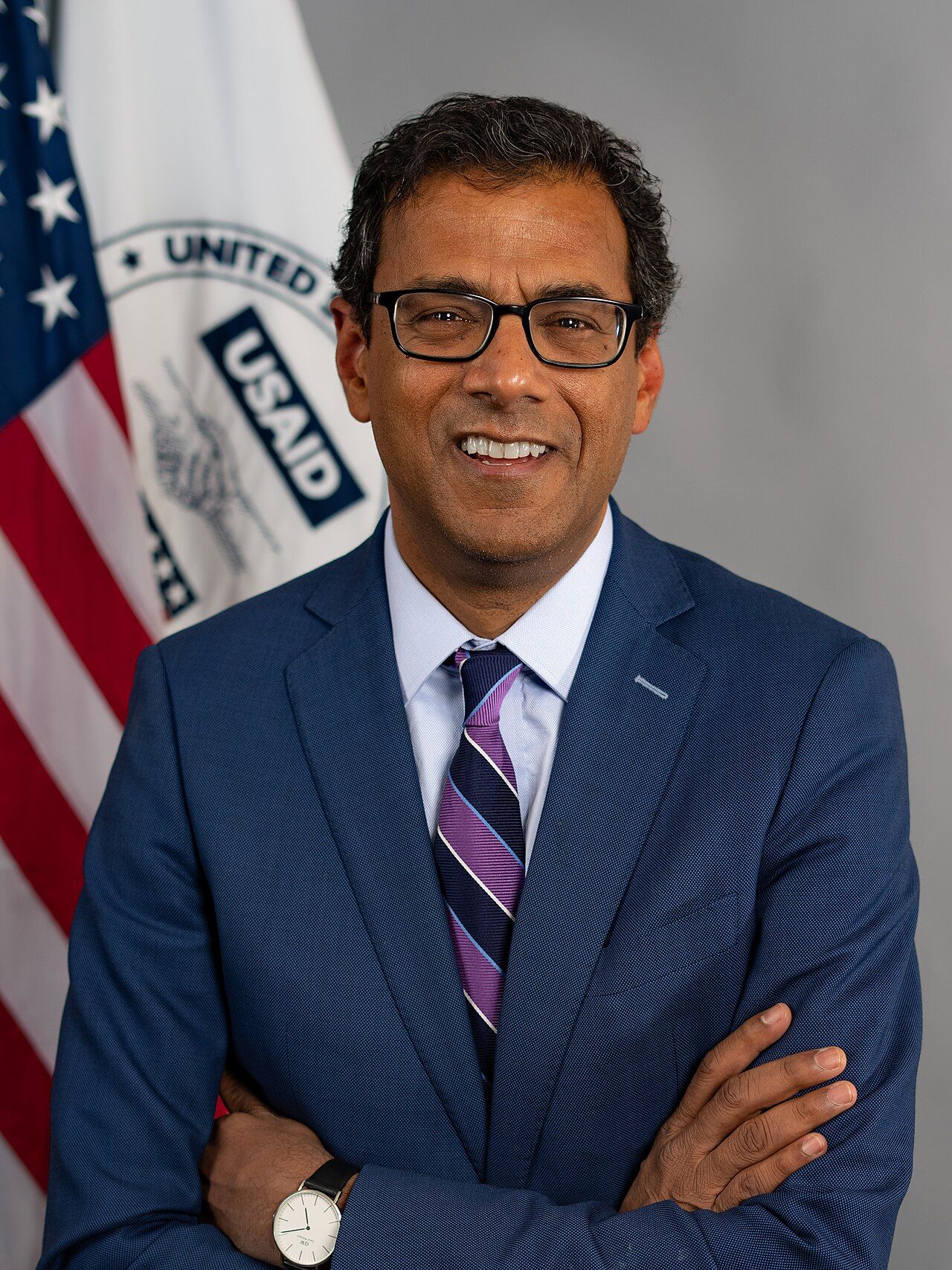
- Leads global health at USAID, until 2025
Atul Gawande’s path into surgery was anything but straight. Between his undergraduate degree and the end of his residency lay a philosophy degree at Oxford, a political campaign, a job in health policy and the beginnings of a writing career. Most training systems would call that a detour. For him it became the whole point.
The detour
He was born in Brooklyn in 1965 to two doctors who had emigrated from India, and grew up in Athens, Ohio.1 After Stanford he went to Oxford as a Rhodes Scholar, taking a master’s in philosophy, politics and economics in 1989.4
He then worked in politics: on Al Gore’s 1988 presidential campaign, and later as a health adviser in Bill Clinton’s 1992 campaign and administration, where he led one of the committees of the health reform task force.1 He completed his MD at Harvard in 1995 and a master’s in public health in 1999.4
A second desk
Writing began almost by chance. A friend who edited the online magazine Slate asked him to write a column about being a doctor.5 He became a staff writer at The New Yorker in 1998, while still in surgical training, and finished his general surgery residency at Brigham and Women’s Hospital in 2003.1
His subject was the gap between how medicine is imagined and how it is practised. “In most medical writing, the doctor is either a hero or a villain,” he said in 2002. “A lot of the topics I ended up writing about came from experiences that I didn’t understand or that bothered me.”5
The books followed: Complications (2002), Better (2007), The Checklist Manifesto (2009) and Being Mortal (2014), all of them bestsellers.12 In 2006 he was named a MacArthur Fellow.4
From words to institutions
The writing became a platform for building things. The WHO’s Safe Surgery checklist, published in 2008, grew from work he led.1 In 2012 he co-founded Ariadne Labs, a health-systems innovation centre.3 He co-founded the surgical-safety charity Lifebox, ran the healthcare venture Haven from 2018 to 2020, and from 2022 to January 2025 led global health at the United States Agency for International Development.21
What the path shows
Gawande is sometimes held up as proof that a doctor can do everything. A more useful reading is narrower. His years away from medicine, in politics and policy, gave him questions that clinical training alone would not have, and writing gave him a way to work on them.
For a young doctor who feels behind because their path has not been linear, his career is a reminder that the detour can be where the important questions come from.
Written by
The Editors
RICH DOCTOR editorial team
Pieces bylined to The Editors are written and edited by the RICH DOCTOR editorial team and represent the publication's own view. Every claim is sourced, and corrections are made openly.