
Case HistoryChoosing a specialty
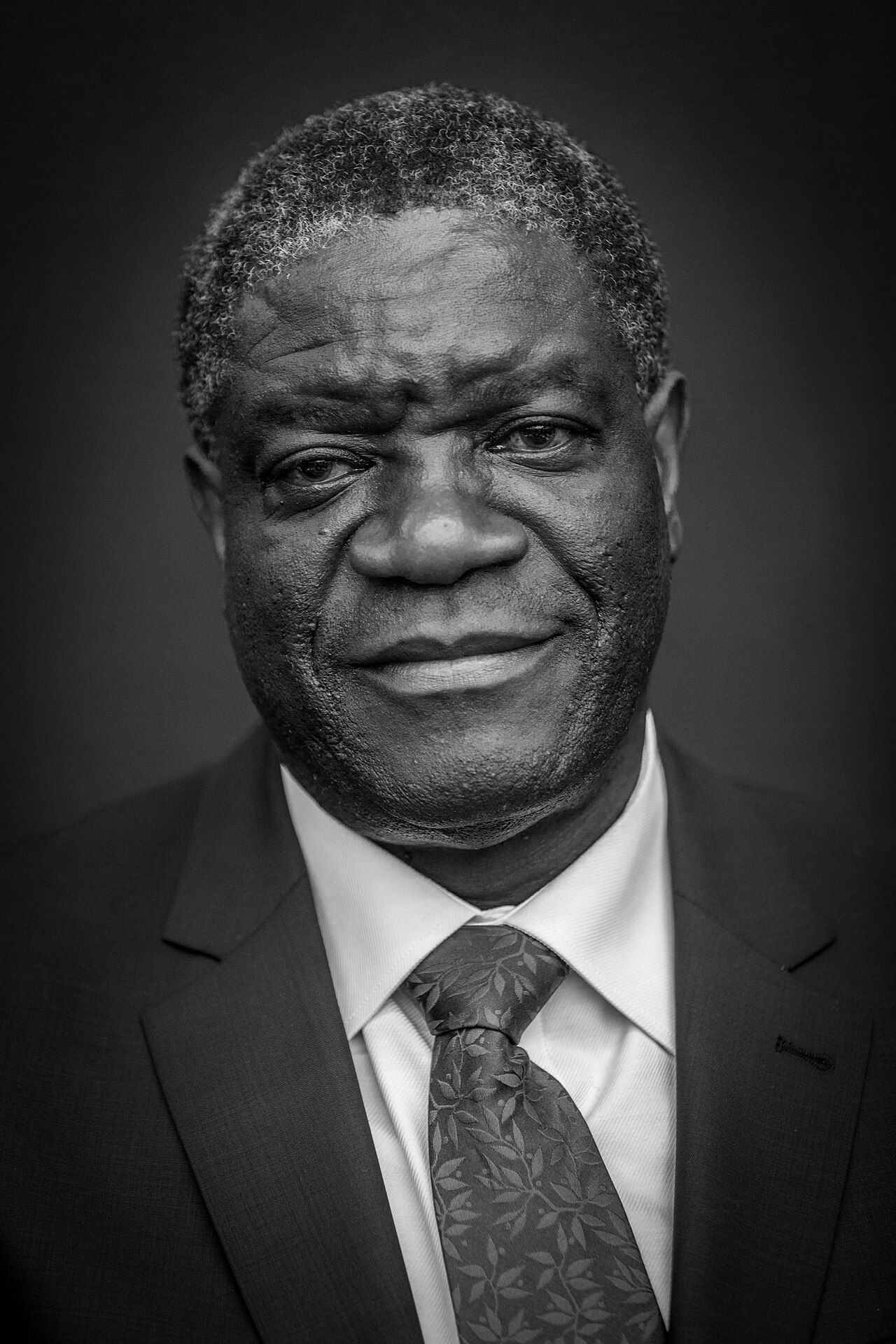
Denis Mukwege: a specialty chosen by the patients who came
A gynaecologist in eastern Congo made the survivors of wartime sexual violence his life's work, and returned home after an attempt on his life.
By The Editors
Independent
From the public record. Written from the published sources listed at the end. RICH DOCTOR has not interviewed Dr Denis Mukwege; every quotation comes from a cited source.
Their path
- 1955
- Born in Bukavu
- 1983
- Medical degree, University of Burundi
- 1989
- Completes gynaecology and obstetrics training, Angers, France
- 1999
- Founds Panzi Hospital, Bukavu
- 2012
- Survives an attack on his home; goes into exile
- 2013
- Returns to Bukavu
- 2018
- Nobel Peace Prize, shared with Nadia Murad
Most doctors choose a specialty. In Denis Mukwege’s case, it could be said that the specialty chose him, through the patients who arrived at his hospital in eastern Congo.
The training
He was born in Bukavu in 1955, the son of a Pentecostal minister. The Nobel committee’s biography records that as a boy he went with his father to visit the sick, and decided then to become a doctor.13
He graduated in medicine from the University of Burundi in 1983 and worked as a paediatrician at Lemera Hospital in the east of what is now the Democratic Republic of the Congo. He then trained in gynaecology and obstetrics at the University of Angers in France, completing it in 1989.3
The patients who came
War changed his work. After Lemera Hospital was attacked, he founded Panzi Hospital in Bukavu in 1999.31 Panzi became known for treating women who had survived sexual violence used as a weapon of war.1 In 2011 a centre for survivors, City of Joy, opened.3
His advocacy made him a target. In October 2012, weeks after he spoke at the United Nations, armed men attacked his home and killed his guard, Joseph Bizimana. He went into exile.13 In January 2013 he came back. The Nobel committee records that local women raised money for his ticket home.1
He kept studying. In 2015 he completed a PhD at the Université libre de Bruxelles, on traumatic fistulas.3 In 2018 he shared the Nobel Peace Prize with Nadia Murad “for their efforts to end the use of sexual violence as a weapon of war and armed conflict”.1
In his Nobel lecture he spoke directly to those who look away: “Turning a blind eye to this tragedy is being complicit.”2
What the path shows
His career follows the patients rather than a plan. He trained in one field, built expertise in another, and then let the needs of the women arriving at Panzi define what kind of surgeon, researcher and advocate he became.
Few doctors face anything like his circumstances. But the underlying choice, to let the problem in front of you decide what you become expert in, is open to anyone.
Written by
The Editors
RICH DOCTOR editorial team
Pieces bylined to The Editors are written and edited by the RICH DOCTOR editorial team and represent the publication's own view. Every claim is sourced, and corrections are made openly.