
Case HistoryStartups and healthtech
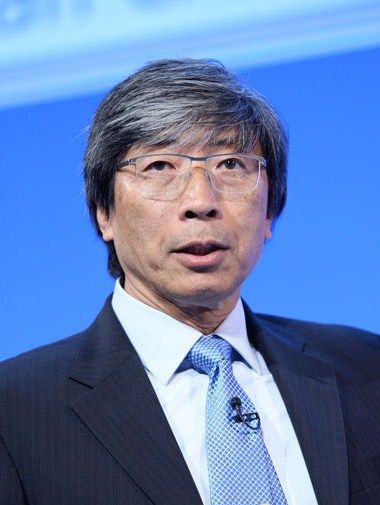
Patrick Soon-Shiong: from transplant surgery to a fortune
A transplant surgeon left academic medicine at 39 to build drug companies. His career shows how far clinical science can travel, and how much scrutiny wealth brings.
By The Editors
Independent
From the public record. Written from the published sources listed at the end. RICH DOCTOR has not interviewed Dr Patrick Soon-Shiong; every quotation comes from a cited source.
Their path
- 1952
- Born in Port Elizabeth, South Africa
- 1979
- Master's in surgery, University of British Columbia
- 1983
- Joins the UCLA faculty as a transplant surgeon
- 1991
- Leaves academia to found his first biotech company
- 2005
- Abraxane approved by the FDA
- 2010
- Sells Abraxis BioScience to Celgene
- 2018
- Buys the Los Angeles Times
Patrick Soon-Shiong is probably the clearest modern example of a doctor whose clinical science became a fortune. He is also a reminder that wealth on that scale brings public scrutiny, which a fair account has to include.
The surgeon
He was born in 1952 in Port Elizabeth, now Gqeberha, South Africa, to Chinese immigrant parents.42 Under apartheid, as a Chinese South African doctor, he needed government permission to practise and was paid less than some of his peers.2 He qualified in medicine at the University of the Witwatersrand at 23, near the top of his class.12
He moved to Canada, earning a master’s in surgery at the University of British Columbia in 1979, and then joined the faculty at UCLA as a transplant surgeon in 1983.4 In 1987 he performed what the Franklin Institute describes as California’s first full pancreas transplant.1
The turn
In 1991, at about 39, he left academic medicine to found a biotechnology company.41 The decisive product came in 2005: Abraxane, which the Franklin Institute describes as the first nanoparticle cancer drug approved by the FDA.1
His companies were sold in two large transactions, APP Pharmaceuticals in 2008 and Abraxis BioScience in 2010, which together came to more than $9 billion.12 He went on to found NantHealth and NantWorks, became a minority owner of the Los Angeles Lakers, and in 2018 bought the Los Angeles Times.42 He has pledged more than $1 billion to philanthropy.1
The scrutiny
Ownership of a newspaper put his decisions in public view. In October 2024 he blocked the Los Angeles Times editorial board’s planned endorsement in the US presidential election, and the paper’s editorials editor resigned in protest.3 His Wikipedia entry records further controversies across his business career, with the reporting behind them.4
What the path shows
For doctors interested in money, his career is instructive in both directions. The fortune did not come from clinical practice; it came from turning a scientific idea into a product, which required leaving the hospital and accepting a very different kind of risk.
And the further a doctor travels from the clinic into business and public life, the more their choices are judged by the standards of business and public life. That is not a reason to stay home. It is a reason to go with open eyes.
Written by
The Editors
RICH DOCTOR editorial team
Pieces bylined to The Editors are written and edited by the RICH DOCTOR editorial team and represent the publication's own view. Every claim is sourced, and corrections are made openly.